
Vision Correction
Corneal Refractive Treatment: Causes, Conditions, and Advanced Solutions
Clear vision is essential for daily life whether it’s reading, working on screens, driving, or enjoying routine activities. For years, glasses and contact lenses have been the most common way to correct vision problems.
Introduction
Clear vision is essential for daily life whether it's reading, working on screens, driving, or enjoying routine activities. For years, glasses and contact lenses have been the most common way to correct vision problems. While effective, they often come with challenges like constant dependency, maintenance, and occasional discomfort.
Today, eye care has advanced beyond temporary solutions. Modern treatments can address the root cause of vision issues rather than just correcting them externally. One such advancement is corneal refractive treatment, which reshapes the eye to improve vision.
Symptoms
If you depend on glasses regularly, your eyes may be showing signs that need attention. Common symptoms include:
- •Blurred vision (near or distance)
- •Difficulty seeing clearly without glasses or contact lenses
- •Frequent changes in eye power
- •Eye strain or fatigue, especially after screen use
- •Headaches related to vision issues
- •Difficulty seeing at night or in low light
- •Occasional double or distorted vision
These may seem manageable, but they often indicate underlying refractive errors that can be treated more effectively.
Causes & Conditions
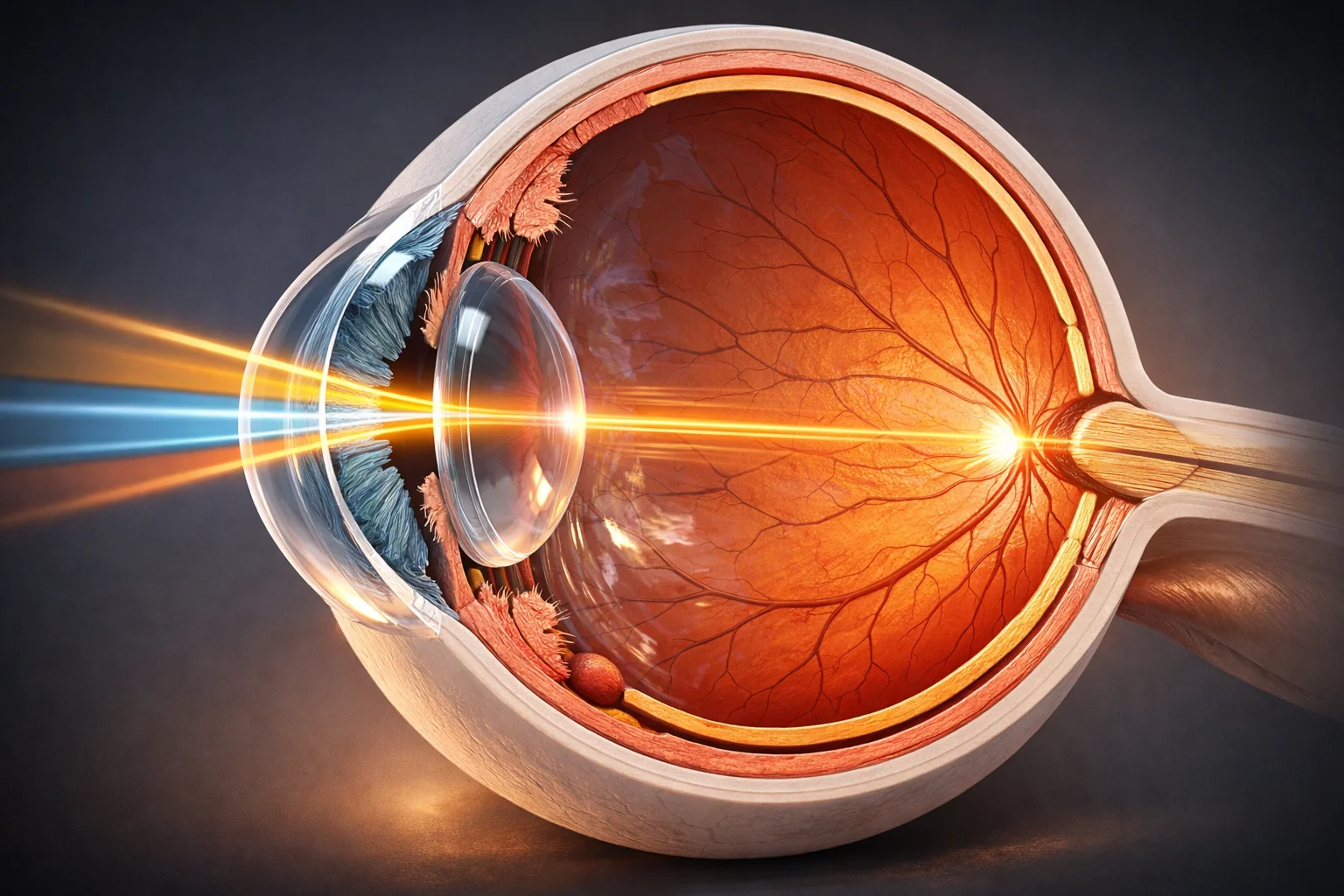
Vision problems occur when light entering the eye does not focus properly on the retina. This is usually due to the shape of the cornea or the length of the eyeball.
Common conditions include:
- •Myopia (Nearsightedness): Difficulty seeing distant objects
- •Hyperopia (Farsightedness): Difficulty focusing on nearby objects
- •Astigmatism: Irregular corneal shape causing blurred or distorted vision
Glasses and contact lenses help improve clarity, but they do not correct the underlying structure of the eye.
Treatments
Corneal refractive treatments improve vision by reshaping the cornea so that light focuses correctly on the retina. These procedures can reduce or eliminate the need for glasses.
- 1. Comprehensive Eye Evaluation Detailed scans are performed to assess corneal thickness, eye health, and suitability for treatment.
- 2. Personalized Treatment Planning Each patient receives a customized plan based on their eye condition and lifestyle.
- 3. Advanced Laser Procedures Modern techniques ensure safe and effective correction:
- •PRK (Photorefractive Keratectomy): Suitable for thinner corneas
- •SMILE (Small Incision Lenticule Extraction): Minimally invasive with improved comfort
- 4. Pre- and Post-Treatment Care Regular follow ups and proper care ensure smooth healing and optimal results.
- 5. Lifestyle Guidance Patients are guided on maintaining eye health through proper habits and preventive care.
Conclusion
Corneal refractive treatment has transformed vision correction by addressing the root cause of refractive errors rather than relying only on temporary solutions like glasses.
However, the right approach requires proper evaluation and expert guidance. Vision care is not just about immediate clarity it's about long term eye health and quality of life.
If you've been depending on glasses for years, it may be time to consider a more lasting solution, one that helps you see clearly and live more comfortably.
Related Articles
View AllEye Checkup
Importance of Regular Eye Checkups
Healthy vision is essential for performing everyday activities such as reading, working, and driving.
Eye Care & Wellness
Common Eye Problems and How to Prevent Them
Eye problems are common and can affect people of all ages. Lifestyle habits, aging, environmental factors, and excessive screen …
Eye Care & Wellness
Digital Eye Strain: Causes and Prevention
Digital devices such as computers, smartphones, and tablets are widely used today, but excessive screen time can cause digital …